
Two peaks in truckload prices, two causes.
In August 2026, truckload prices, as measured by the producer price index for long-distance truckload freight, reached 207.6, less than 2% below the record it set in March 2022 and 14% higher than a year earlier.

Truckload prices are within 2% of their 2022 record. Source: BLS via FRED.
Two peaks, two causes
The 2022 peak came out of a demand surge. Pandemic-era consumption filled the network and the invasion of Ukraine sent diesel to a record. When demand cooled, rates followed it down, to 160.3 by November 2024, and shippers who waited out the spike were rewarded.
This climb isn’t being driven by volume. In the first quarter of 2026, shippers spent 21.8% more on freight than a year earlier to move 0.6% more of it, according to the U.S. Bank Freight Payment Index. The Iran war, which began at the end of February, took diesel from $3.81 a gallon to a record $6.53 in the week of September 21, well above the 2022 high. Meanwhile, a federal rule tightening non-domiciled commercial driver’s licenses (effective March 2026) and stricter English-proficiency enforcement took capacity out of the market.
McCormick named both pressures when it raised its cost inflation forecast to as much as 7% on October 1. Neither depends on how much freight shippers move, so a cooler economy is unlikely to relieve them the way it did last time.
The number you do control
A shipper can’t negotiate the price of diesel or bring capacity back. What it decides every day is how many trucks it takes to move the same volume, and in most networks that number is higher than it needs to be.
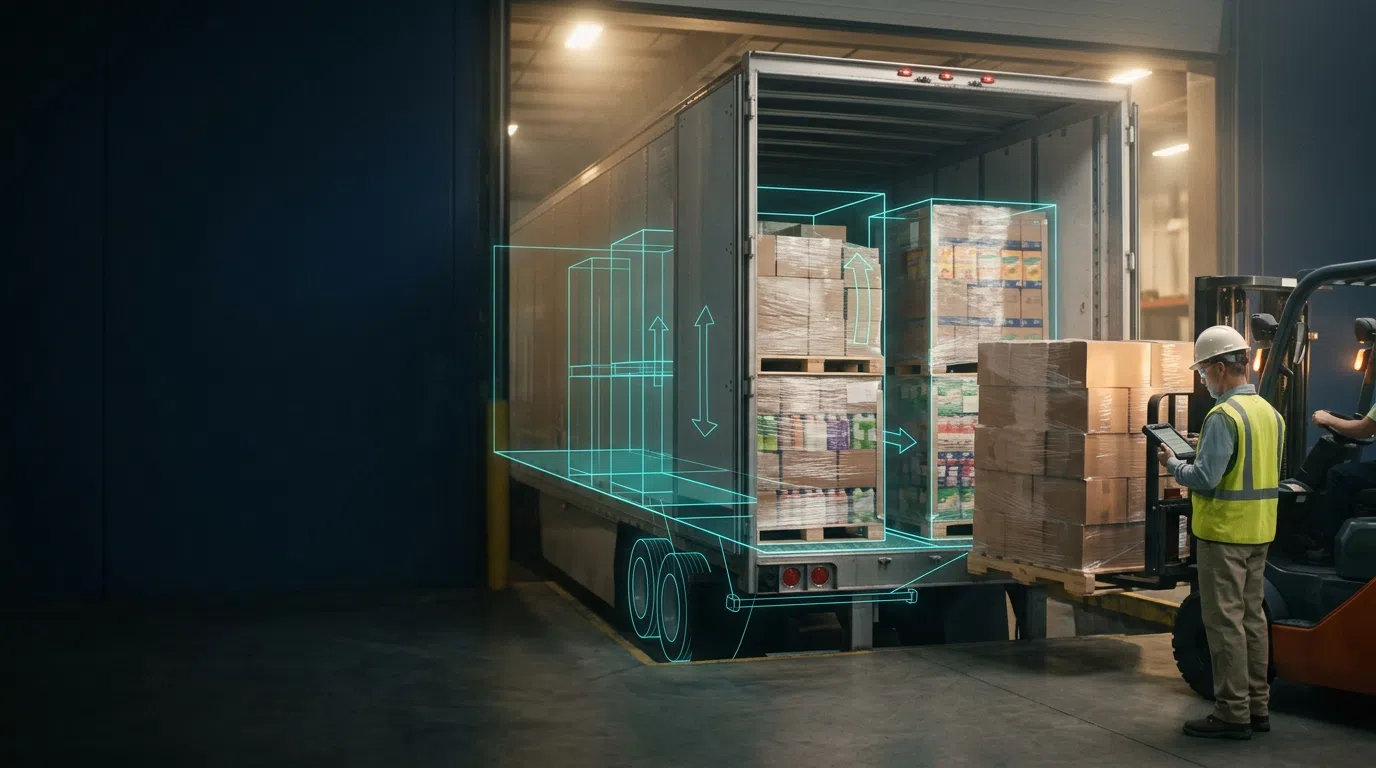
A survey of 158,000 trucks found that 91% left the dock with legal payload still unused. Part of the reason is habit, since many order policies still define a full truck by a 40,000-pound rule of thumb or a case count, neither of which reflects what the equipment can actually carry. The rest is physics, because mixed product portfolios fill a trailer’s floor before they reach legal weight, or reach the weight limit while floor space is still open. A truck loaded to 85% of its legal capacity costs the same to move as one loaded to 100%, and it delivers 15% less product for every dollar spent.
At today’s rates, every truck a shipper no longer needs avoids its full cost, fuel included.
What closing the gap is worth
Load optimization typically cuts freight spend by 5 to 10%. On a $100 million freight budget, that’s $5 to 10 million a year.
Riviana Foods, a leading U.S. rice company, ships more than 10,000 truckloads a year, and its trailers were filling up before they reached legal weight. After deploying AutoO2, Riviana recovered more than $1 million a year in freight cost, reached ROI within 90 days, and cut loader training time by 80%. A global consumer goods leader using the same approach reached 98% truck utilization across its network.
AutoO2 doesn’t replace the ERP, warehouse system or TMS. It reads order and item data from the systems already in place, builds each load to the legal weight, cube and axle limits of the truck carrying it, and sends the plan back. Most clients reach ROI within 90 days.
Two questions for this quarter
- How does your order policy define a full truck, and when was that definition last checked against the legal capacity of the equipment you actually use?
- What is your average payload as a share of legal capacity, by plant and by lane?
The answers usually point to the fastest freight savings available this year, and they don’t depend on where truckload prices go next. Our free Supply Chain Loss Analysis takes about 15 minutes and ranks where to look first. For where freight cost hides beyond the load, see our white paper, Reducing Transportation Costs for High-Volume Shippers.
Sources: BLS via FRED; U.S. Bank Freight Payment Index; EIA; Supply Chain Dive.